Steel is sold by weight and specified by dimension, so every quotation starts with the same arithmetic. Here is the whole method.
The base equation
Weight (kg) = Volume (mm³) × Density (g/cm³) ÷ 1,000,000
Volume is the cross-sectional area multiplied by the length. All that changes between products is how you work out the area.
Section by section
| Shape | Cross-sectional area (mm²) |
|---|---|
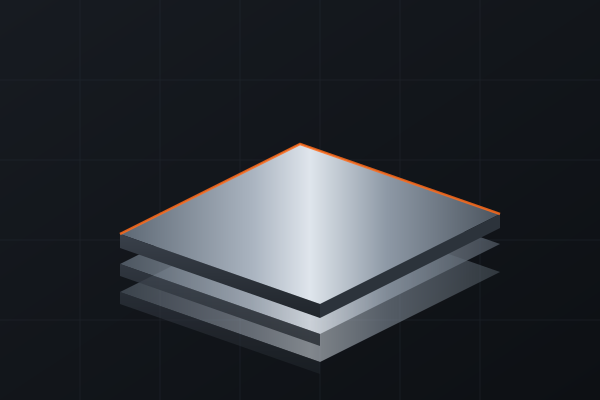
| Sheet, plate, coil | Width × Thickness |
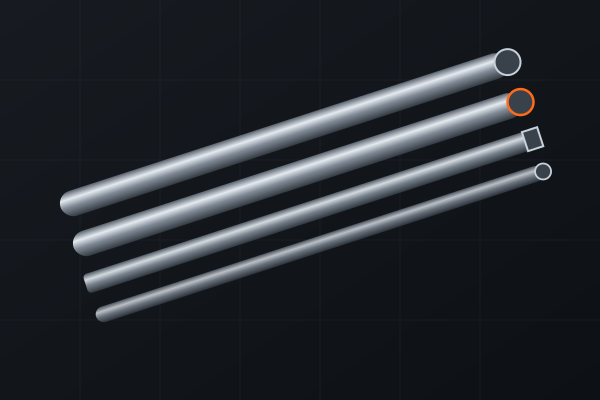
| Round bar, wire | π ÷ 4 × Diameter² |
| Square bar | Side² |
| Hex bar | 0.866 × Across-flats² |
| Flat bar | Width × Thickness |
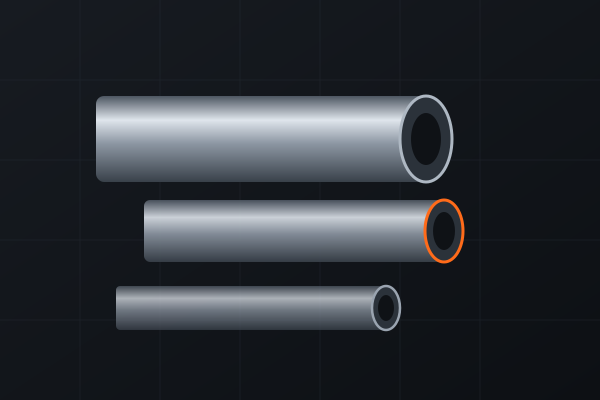
| Round pipe or tube | π × (OD − Wall) × Wall |
| Square hollow section | 4 × (Side − Wall) × Wall |
| Rectangular hollow section | 2 × (A + B − 2 × Wall) × Wall |
| Equal or unequal angle | (Leg A + Leg B − Thickness) × Thickness |
| Channel, I-beam | 2 × (Flange width × Flange thk) + (Height − 2 × Flange thk) × Web thk |
Density by grade
Density is not the same across the family, and using 8.0 for everything overstates a ferritic order by about 4%.
- 304 and 304L — 7.93 g/cm³
- 316 and 316L — 7.98 g/cm³
- 321 — 7.90 · 201 and 202 — 7.80 · Duplex 2205 — 7.80
- 410, 430 and 431 — 7.70 g/cm³
Why the delivered weight differs
Theoretical weight is a calculation, not a measurement. In practice expect a difference of 2–5% because of:
- Rolling tolerance on thickness — the mill works to a range, not a number
- Width and length trim
- Weld bead on welded pipe
- Coating, PVC film or oil
Every serious supplier invoices on actual weighbridge weight, with theoretical weight used only to estimate. If someone quotes you a price per piece and refuses to weigh the consignment, ask why.
Our product pages carry a calculator that runs these formulas with the right density for the grade you pick — useful for checking a quotation before you accept it.